

Storytelling is a vital component of any effective marketing or branding strategy. It aids lead engagement, improves product understanding, builds brand-customer relationships, supports authenticity, and boosts recall.
But incorporating stories into your digital presence can be a challenge, especially if this practice doesn’t align with your current marketing activities. Still, that shouldn’t mean there’s no space in your branding strategy left for a stronger focus on your brand narrative. Instead, it simply shows that your unique approach to storytelling has to align with your marketing strategy.
So, how can you start sharing your brand narrative throughout your digital distribution channels?
This guide covers some of the most effective ways to tell your brand’s story across multiple platforms. Moreover, it provides great examples of how real-life brands are doing the same, to inspire you to embrace this tactic.
Essential Website Storytelling
If there’s just one digital platform you should enrich with storytelling, it has got to be your website.
After all, your website represents the space people will inevitably go to evaluate your brand’s offer. And once they’re there, they’ll make judgments about your business in a really short time.
That’s why it’s a good idea to use the power of storytelling to ensure your audience forms the right idea about what your brand does, what it stands for, and how dedicated it is to customer-centricity.
Using Stories to Align Product Value with Customer Pain Points
One of the most effective ways to tell your brand’s story in a way that will support your conversion goals is, of course, to align the value of your solutions with your customers’ pain points. Why? Because today’s consumers are through with irrelevant products.
Research shows that people don’t just expect personalisation and hyper-relevance when interacting with businesses. Much more importantly, they actively ignore branded messages that aren’t relevant to their unique experiences.
So, instead of allowing your value propositions to fly over your target audience’s heads, why not provide some context that can allow you to demonstrate how and why your products or services represent the ideal solution to their needs?
For example, look at how Rosie uses storytelling to provide that context. By painting a picture of a typical real estate agent’s day, this brand ensures that web visitors recognise their specific pain points in the copy. Then, Rosie uses a natural opportunity to introduce its AI real estate answering service solution, achieving hyper-relevance that instantly elevates visitors’ purchase intention and effectively drives higher conversion rates.

Source: heyrosie.com
Establishing Brand Expertise and Authenticity
You likely know that trust is a key factor influencing most consumers’ purchase decisions.
In fact, the latest research on the importance of brand trust revealed that 88% of people consider brand credibility before investing in its solutions or services.
But while showcasing reviews and other types of social proof truly helps position your organisation as trustworthy, it’s not always enough to convince potential customers that your company has what it takes to permanently solve their pain points.
Embracing storytelling — particularly in a way that prioritises expertise and authenticity — could be the tactic you need on your website to boost sales.
So, how can you use storytelling to elevate trust?
Start by sharing, in your own words, the experiences that have made your brand what it is today.
For example, take a look at Mannequin Mall’s About Us page. You’ll see that it shows how the founder experienced a very specific pain point that they couldn’t solve. But instead of letting it go, they decided to start a business that would meet their needs and help everyone else with a similar experience find high-quality products at a fair price.
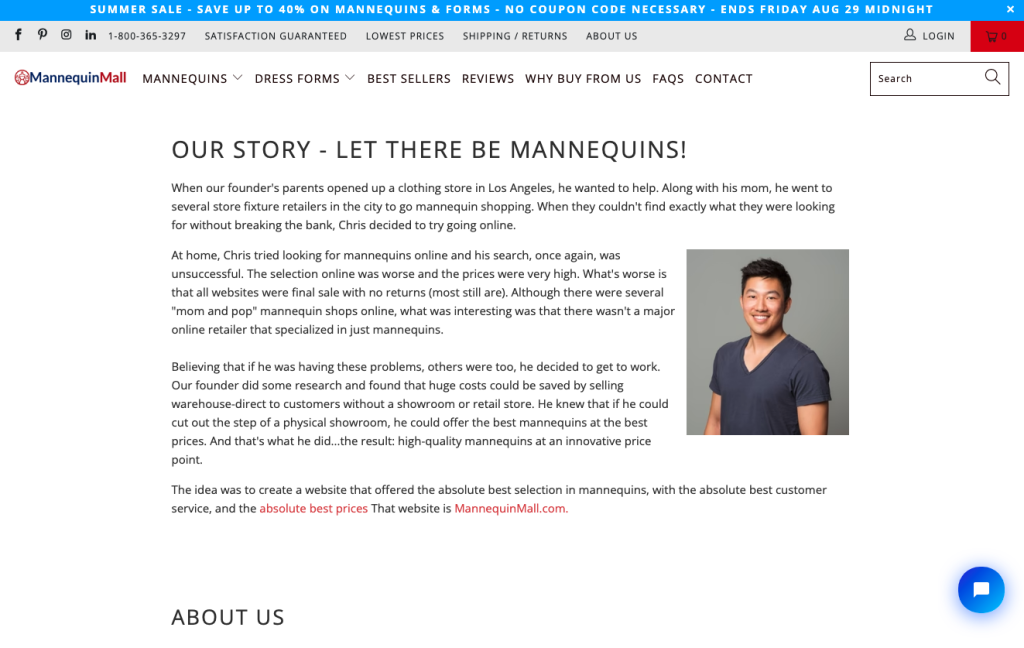
Source: mannequinmall.com
Or how about focusing on authenticity?
After all, consumer behavior research shows that people want to buy from brands that are customer-centric, genuine, and transparent.
So, why not show you’re the real deal by sharing your brand’s story on your website?
For instance, Kuyichi is a sustainable clothing brand that prioritises ecological practices. However, instead of simply making sustainable claims and leaving things at that, this business presents shoppers with a list of its fabric suppliers, their production processes, and some background on how these affect its products.
The outcome isn’t just a higher level of brand transparency and authenticity — i.e., trust. The storytelling format of presenting information also makes it easier for shoppers to process this data, resulting in much better-informed buyers who are far more likely to shop with Kuyichi in the future.
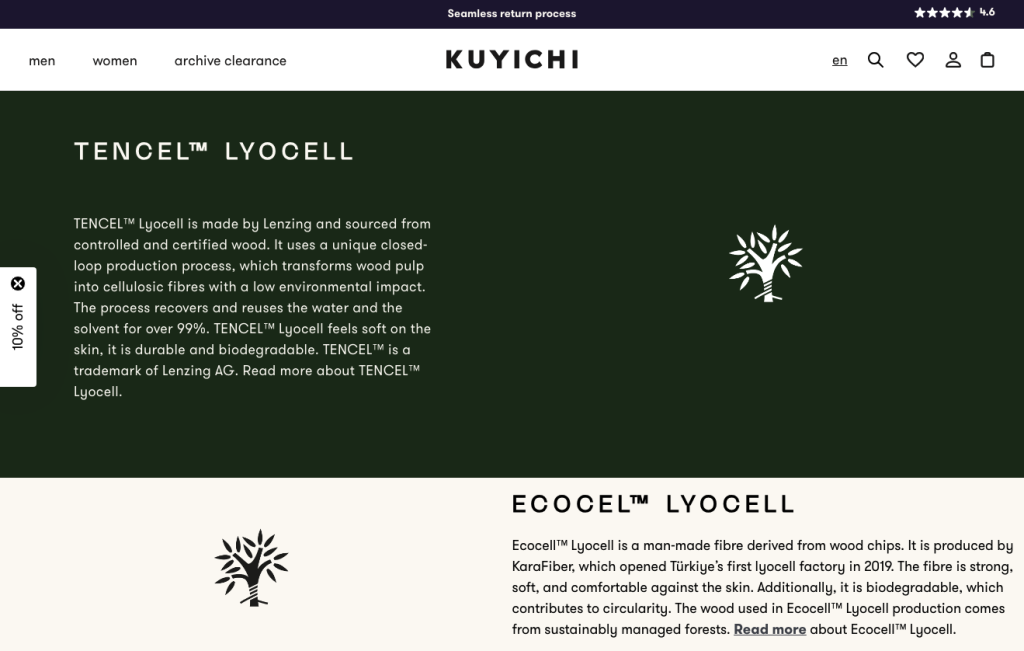
Source: kuyichi.com
Blogging and Storytelling: A Match Made in Heaven
Even though it’s a more traditional form of content marketing, blogging works marvelously for driving business results.
For starters, publishing blog posts is a budget-friendly method of attracting and engaging leads. It’s also an exceptional method for nurturing prospects into customers. Plus, research from HubSpot found that it remains the top ROI marketing tactic for B2B brands in 2025.
Grabbing Readers’ Attention with Relatable Narratives
While blog posts can be a great way to establish brand authority, drive product discovery, or aid product evaluation, they’re not always exciting enough to yield impressive results.
Most people’s attention spans are rapidly shrinking, making it more difficult to engage them.
Moreover, video and visuals are taking over as people’s preferred method of learning about products, making blog posts seem like a suboptimal content format for engaging potential customers.
However, your blog posts don’t have to be mundane just because they’re a text-heavy resource.
There are several methods to make them more engaging and exciting. And storytelling could be one of the keys to accomplishing those effects.
Something as simple as infusing a bit of storytelling into your content strategy can be a great way to hook web visitors as soon as they land on one of your blog posts.
Somewhere’s The Strategic Advantages of Hiring a Professional Bookkeeper article, for instance, employs personal storytelling to elevate engagement rates, content relevance, and direct reader attention toward the meat of the article.
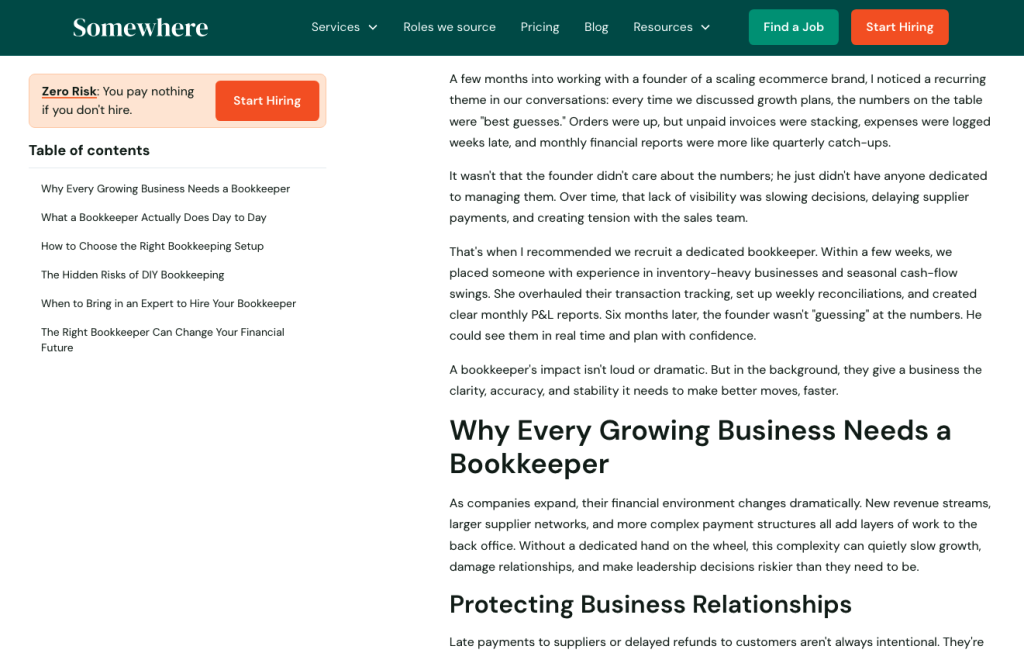
Source: somewhere.com
Earning Consumer Trust
Or, if your primary goal for your content strategy includes brand positioning, why not use brand narratives to earn your prospects’ trust?
Look at how Medical Alert Buyers Guide does it in its Best Medical Alert Landline Systems review. This business understands the importance of credibility in its industry. So, to ensure readers perceive it as a trustworthy entity they can rely on for solid shopping advice, it employs storytelling to describe its testing and reviewing process.
Sure, this section of the article may be relatively short. However, because it paints a clear picture of what the brand’s process looks like, it does precisely what it needs to — it demonstrates that Medical Alert Buyers Guide is a trustworthy company anyone can easily rely on when looking for solid shopping advice.

Source: medicalalertbuyersguide.org
Incorporating Brand Narratives Into Social Media
Even though your website is crucial for positioning your brand in a positive light, it’s not enough to just apply your branding strategy to this aspect of your digital presence. You need to understand how consumers discover and interact with brands in 2025.
According to research, product discovery and evaluation mostly happen on social media.
GWI found that 30% of people discover new brands through social media ads, while 23% do so through recommendations and comments on social platforms. Moreover, eMarketer’s findings show that 67% of US consumers are likely to go on social platforms to research potential solutions to their pain points.
Knowing this, you’ll obviously want your social media presence to show your brand in the best possible light.
Fortunately, incorporating brand narratives into social media doesn’t have to be a complex tactic. In fact, it can simply be a continuation of your existing marketing strategy and still yield impressive results.
Using Emotional Connection to Build Customer-Brand Relationships
Relationship building lies at the core of any successful marketing tactic. After all, getting your audience to feel connected to your brand isn’t just a prerequisite for driving conversions. It’s equally important for ensuring customer loyalty.
And the best part is that storytelling — especially narratives that focus on your brand’s origins and mission — can be a marvelous way to accomplish that feeling of connection between your organisation and your target audience.
For example, check out how Brain Ritual incorporates this tactic into its social media presence. Instead of simply using its social platforms to market its solution, this brand takes a look back on what drove its founder to create the product in the first place. By doing something as simple as sharing their personal experience with migraines, Brain Ritual’s founder manages to demonstrate that they understand the brand’s prospects’ pain points, which is precisely what consumers are after — a relevant experience that addresses their unique needs.

Source: tiktok.com
Providing Insights Into Your Brand’s Product or Service
Sometimes, the best way to convince consumers to trust and buy from your business isn’t to make impressive promises. Instead, it’s to give them a taste of what they will really get if they choose to convert.
If you think about how people choose what products to invest their hard-earned money in, you’ll find that personal experience plays a big role in determining their willingness to buy. However, the issue with selling online or offering services is that providing a first-hand experience is almost impossible.
With this in mind, storytelling can be a great method to overcome this conversion obstacle — especially when you employ it on social media, where people discover solutions in the first place.
Take a look at how Brickface does it on Instagram. Instead of focusing its online presence on selling its services, this brand prioritises explanations about what its services include. It gives followers a chance to take a closer look at the process of, for instance, installing cultured stone.
On the one hand, this approach allows Brickface to demonstrate its expertise. On the other hand, it gives potential customers a chance to learn more about the process and ensures they choose a genuinely competent service provider once they’re ready to convert.
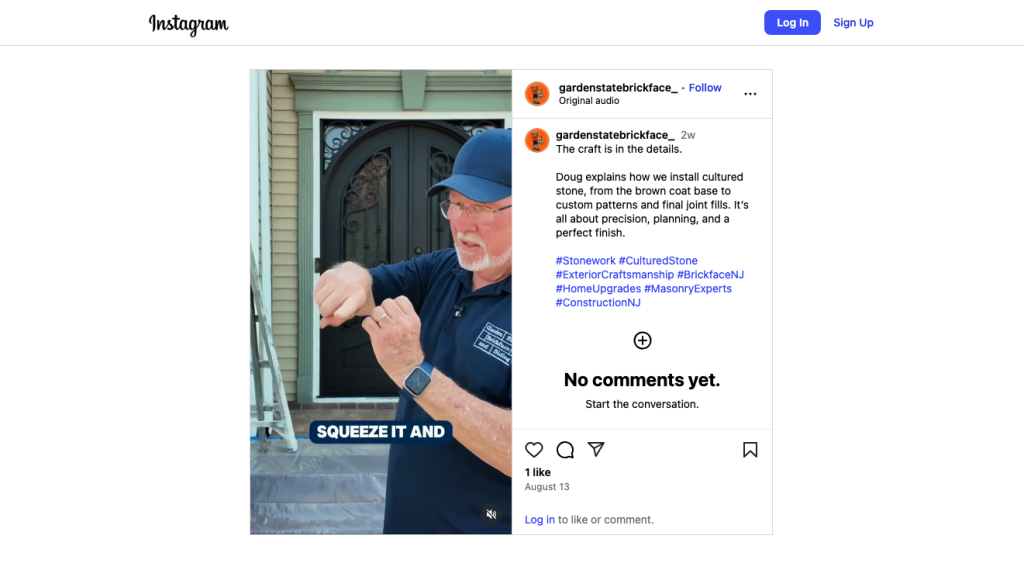
Source: instagram.com
Final Thoughts
Telling your brand’s story across multiple platforms doesn’t have to be a challenging addition to your existing marketing strategies. In fact, you don’t even have to go far with this tactic to reap its benefits.
But the simple fact is that storytelling genuinely drives business results — especially when used strategically to support your primary branding or conversion goals.
With this in mind, don’t hesitate to try out the tactics covered in this guide. Align them with your brand’s identity, your target audience’s priorities, and your content marketing efforts.
At the end of the day, you’re guaranteed to see positive results. And if you like those gains, you can easily expand this approach to a wider selection of distribution platforms, whether that includes email marketing, branded communities, or even offline marketing activities.
PS: Are you receiving free publicity opportunities, straight into your inbox?
No?!! (Wha?)