

If you’ve ever sent a pitch that vanished into the media void… you’re in very good company.
PR professionals are under pressure to deliver coverage, but journalists are under even greater pressure to deliver stories quickly. When a pitch doesn’t immediately help them do that, it gets parked, postponed or (politely) ignored.
The problem usually isn’t effort. It’s structure.
Most pitches focus on what the brand wants to say, rather than what journalists need to publish.
The good news? Once you understand how journalists assess stories, improving your pitching success becomes far more predictable.
Even better, there’s a simple (and free) way to strengthen your stories before you even press send.
Why many PR pitches fail to land
Journalists aren’t rejecting pitches to be difficult. They’re filtering aggressively because they have limited time and constant deadlines.
Every day, journalists receive 100s of emails competing for attention, with most failing because they require too much work to turn into a publishable story.
Common friction points include:
- generic angles that could apply to any brand
- commentary that feels promotional rather than insightful
- a lack of credible expert perspective
- no case study or real human story
- unclear relevance to current news
- incomplete story components that require follow-up
If a pitch feels like homework, it rarely makes the shortlist.
What journalists actually want
Journalists are looking for:
✔ credible experts
✔ timely insights
✔ relevant commentary
✔ case studies with real people
✔ clear angles tied to current conversations
They don’t want fluff. They want usable material.
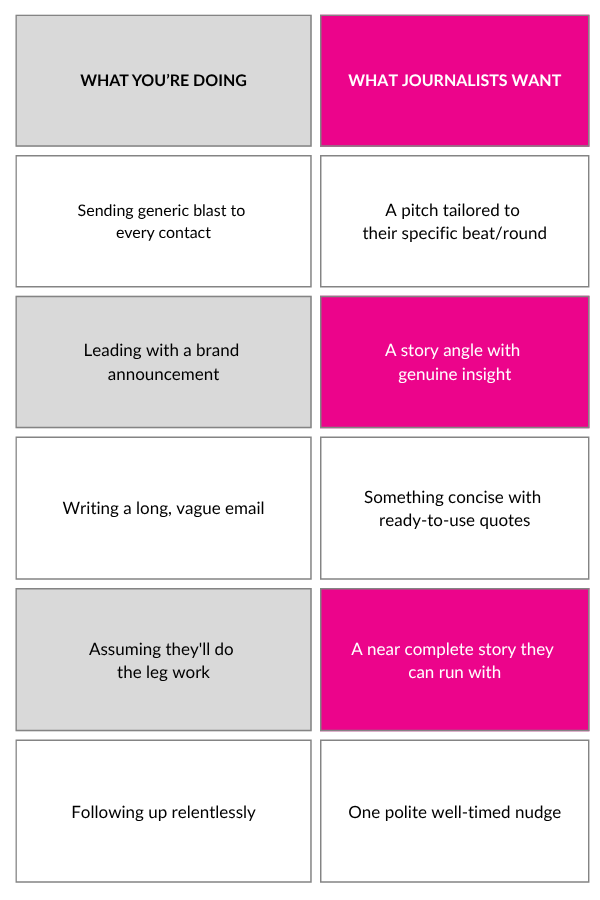
Think of your pitch as a ready-made puzzle piece that fits neatly into the story they’re already writing.
The shift smart PR professionals are making
Rather than pitching blindly and hoping something resonates, many PR professionals are now building stories more strategically by sourcing the right ‘voices’ first.
Sure, most PR professionals know SourceBottle as a platform for responding to media call outs. Fewer realise you can also create your own call out to source:
- Expert commentary
- Case studies with lived experience
- Industry insights
- Real people with relevant perspectives
This allows you to strengthen your story before pitching it, ensuring it includes the credible voices journalists rely on.
So, instead of pitching a journalist with a half-formed angle, you can build a stronger story first using credible voices, not just brand messaging.
5 ways to improve pitch success
1. Start with the story angle
A strong insight or timely angle is more compelling than a brand announcement.
Use SourceBottle to identify experts who bring the angle to life.
2. Align with current conversations
Journalists prioritise relevance.
Connect your pitch to trends or emerging issues where expert perspective is valuable. (Check out our monthly newsjacking calendars, like this one for April 2026 for timely opportunities.)
3. Provide quotable insights
Strong commentary saves journalists time and increases the likelihood your pitch will be used.
Experts sourced through SourceBottle can provide ready-to-use perspectives and strong, informed opinions.
4. Include real people
Case studies and lived experience add credibility and relatability to stories.
SourceBottle call outs help PR professionals find authentic voices quickly.
5. Reduce guesswork
Responding to active media call outs removes uncertainty about what journalists need.
It also ensures your pitch is aligned with timely editorial demand.
From Pitch to Page: see the full strategy in action
If you’d like a practical walkthrough of how to apply this approach, our webinar: “From Pitch to Page: Why Most PR Pitches Fail (And How to Fix Them)” breaks down:
- Why many PR pitches fail before they’re opened
- How journalists evaluate story ideas
- How to use SourceBottle strategically
- How to strengthen stories using real voices
And we introduce you to our free AI Assistant (Meet: ‘SourceBottle Expert Finder‘) who does all the heavy lifting for you!
👉 Watch the webinar: https://bit.ly/47x3X82
Better stories lead to better coverage
So, it’s safe to say that improving pitching success isn’t about sending more emails. It’s about building stronger stories.
When your pitch includes credible experts, relevant insights and authentic human perspectives, journalists can move faster and publish with confidence.
That’s exactly what SourceBottle is designed to support.
If pitching has ever felt like guesswork, it may simply be that your story was missing the voices journalists need. Start there, and everything else becomes easier.
👉 Explore SourceBottle or post a call out to find expert voices today.
PS: Are you receiving free publicity opportunities, straight into your inbox?
No?!! (Wha?)