

One of the most frustrating experiences a business owner can have is reaching a wide audience, engaging their attention, only to witness buyers stalling in the sales funnel and not converting into customers.
Sure, people leaving your sales funnel is inevitable. After all, the median conversion rate across all industries is 6.6%. Additionally, even if you get web visitors to add an item to their cart, they’re still highly unlikely to complete their purchase, as the average cart abandonment rate is 70.22%.
In other words, more than 90% of people you reach with your marketing campaigns won’t buy from your brand.
Nevertheless, you can and should explore opportunities to optimise your sales strategies and eliminate preventable funnel leaks.
This guide covers some of the best ways to bridge the gap between awareness and sales, helping you identify the weak points in your sales cycle and presenting tactics for fixing them once and for all.
Poorly-Optimised Inbound Marketing
Sometimes, the primary reason for buyers stalling in the funnel — or leaving it altogether, for that matter — is that your inbound marketing strategy isn’t optimal for your business.
You may find that your primary struggle isn’t about attracting enough leads. In fact, you may even be seeing a ton of inbound web traffic. However, if none of those site visits are translating into sales, it’s safe to assume that your marketing funnel does have a leak.
So, what are the possible reasons for this happening?
Well, there are two potential culprits.
On the one hand, you may be casting your net too wide; that is, you’re not reaching your ideal customers.
You see, people don’t just want any solution to their pain points. Instead, they seek exceptionally effective and relevant products/services that can guarantee the removal of their problems.
If you look at the research on what consumers want from brands, you’ll find that most people expect businesses to understand, care about, and address their unique needs. And if you’re not making it clear that you have what they require, they’re quite likely to ignore you.
For example, DialMyCalls offers an Emergency Notification solution meant for organisations. However, the brand doesn’t expect potential customers to imagine situations in which this product could be useful. Instead, it actively presents different scenarios in which this type of solution offers the biggest benefits. This makes it super easy for Dial My Calls’ target audience to recognise themselves in the copy and value propositions, communicating that they’re in the exact right spot to solve their pain points and encouraging them to continue on with their buying journey.
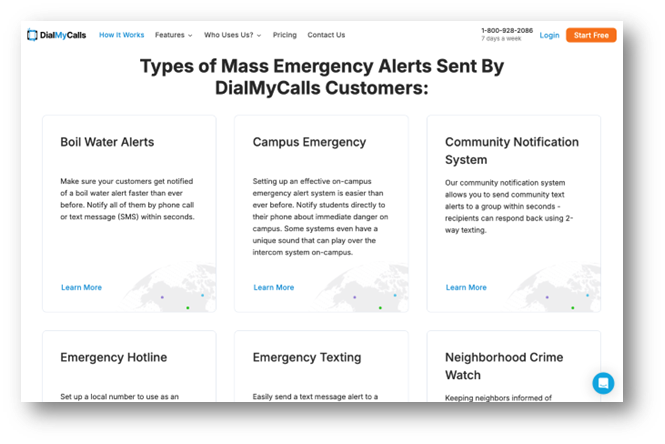
Source: dialmycalls.com
On the other hand, your chances of making a sale may be failing because you don’t understand your customers’ buyer’s journey and their motivations for moving through the funnel.
One of the most common ways businesses make this mistake is that they completely ignore the mid-funnel stages and the product evaluation process.
Yes, the ideal way to boost your brand’s success is to shorten the sales cycle as much as possible (freeing up your marketing budget to attract new leads). However, expecting web visitors to be able to jump from a single glance at your homepage to becoming customers is quite a stretch.
Instead, produce and highlight mid-funnel resources that your audience will seek out when moving from one stage of the funnel to the next. This can include product explainers, buyer guides, or comparison charts.
Alternatively, you could even do something similar to Uproas and translate your niche product features into tangible benefits your prospects can expect to receive should they choose to become your customers.
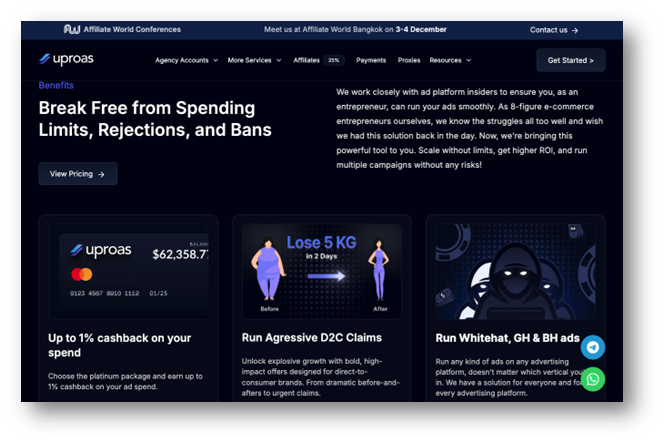
Source: uproas.io
Unaddressed Conversion Obstacles
Another common cause of prospects stalling in the sales funnel and not converting into customers is that you’re not sufficiently effective at addressing and removing their conversion obstacles.
If you look at why consumers don’t buy, you’ll discover that there are several factors potentially harming your conversion rates:
- Lack of clarity about brand expertise. Ultimately, if your audience doesn’t trust your brand to provide them with a high-quality product or service, they won’t complete a purchase. If they do, however, they’re not just more likely to turn into customers. They may even pay more to become your clients, with 87% of shoppers being prepared to pay a premium for trust.
- Insufficient social proof. Most consumers require proof of a product’s effectiveness. And the primary way for them to verify that a solution genuinely offers the benefits it claims is to explore social proof. Without it, they simply can’t be sure that they’re making the right decision. That’s why 45% of consumers won’t purchase a product if there are no reviews available for it.
- Unclear product value. Sometimes the leak in your funnel isn’t a missing trust-building element that can convince your audience to trust you. Instead, it’s a lack of content that communicates value effectively enough to boost people’s purchase intent.
- Missing or subpar calls to action. In most cases, you can’t rely on your target audience to move through the buyer’s journey on their own accord — especially if removing a pain point isn’t at the top of their list of priorities. With this in mind, the fact that 70% of small business websites don’t have a clear CTA definitely presents a considerable conversion obstacle that could be causing your sales funnel to leak. Alternatively, if your CTAs are too pushy, that could be causing bounces as well, particularly if you consider that overtly aggressive sales tactics usually backfire and harm brand reputation.
- Complex conversion process. Finally, when it comes to reasons why your audience isn’t turning into customers, think about whether your checkout process is streamlined and user-friendly. Or is it clunky and cumbersome, presenting yet another bump in your audience’s road toward resolving their pain points?
As you can see, most of these conversion obstacles can be significant enough to stop your prospects from becoming customers. Fortunately, however, you can easily address and fix them and build an online presence that gently guides leads through the funnel without allowing them to become scared or overwhelmed at any part of the journey.
For example, check out how RE Cost Seg removes these conversion obstacles. Instead of inviting potential customers to immediately invest in the brand’s services, it prioritises a nurturing approach during the top and mid-stages of the buyer’s journey. The most prominent of its conversion strategies is the free real estate depreciation calculator, which allows anyone to figure out how much they could really save by investing in a cost segregation study. However, you’ll also see that the rest of the brand’s on-site content is geared toward moderation, with CTAs inviting customers to book a free consultation and answering most audience questions with in-depth FAQ content to guarantee they understand the value R.E. Cost Seg offers.
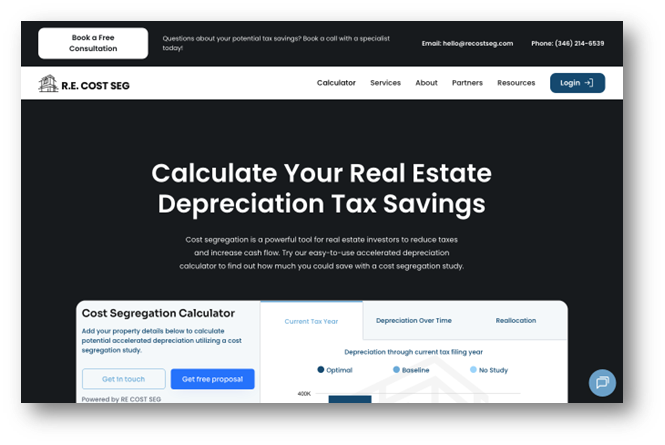
Source: recostseg.com
Inadequate Customer Experience Management
Finally, if you’ve optimised your inbound marketing strategies and removed the most common conversion obstacles from your website, yet are still seeing low conversion rates, it’s time to start thinking about how you’re treating potential customers.
You see, customer experience is everything in 2025.
Consumers are through with brands treating them solely as a number (that is, a source of income). They’re also prepared to walk away from businesses that aren’t willing to prioritise their needs — both during the pre- and post-purchase phases of the buyer’s journey.
But what are the potential CX reasons for consumers leaving the sales funnel before converting?
For starters, one of the reasons you’re failing to win over customers may simply come down to where you’re trying to convert leads into clients.
Yes, in a typical funnel, transactions do happen on-site. But the awareness and evaluation stages hugely depend on what you do on other digital channels.
According to the latest research from Sprout Social, a significant majority of consumers use social media to discover products and brands. So, if you don’t have a strong presence on the channels your prospects use in their free time, you’re highly unlikely to engage them in a way that will genuinely boost their purchase intent.
With this in mind, one of the most effective ways to fix a leaky sales funnel is to use social media to publish content that supports the buyer’s journey and drives conversions.
For example, if you check out CeraVe on TikTok, you’ll find that the brand fills its profile with valuable content that guides buyers through the sales funnel, with educational resources, expert advice, and even social proof, all meant to generate product understanding and boost purchase intent.
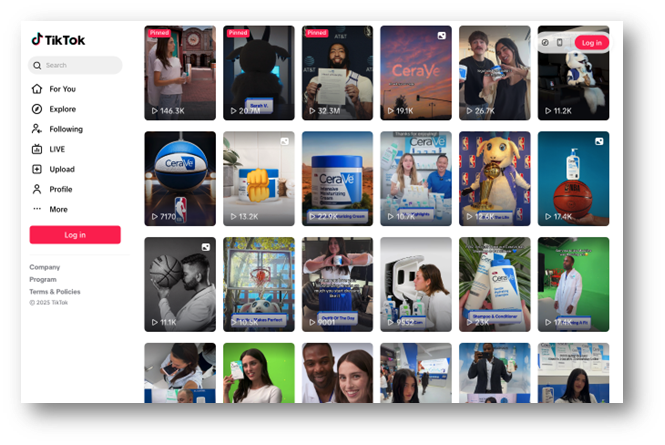
Source: tiktok.com
Additionally, your sales funnel may be leaking due to a customer experience that’s not user-centric or personalised.
In 2025, 74% of consumers demand more personalisation, and 77% seek convenience from their shopping journeys.
One of the most effective ways to keep prospects happy (and nudge them toward the buying stage of the sales cycle) is to present them with hyper-relevant content that shows you’re willing to go above and beyond to meet their needs.
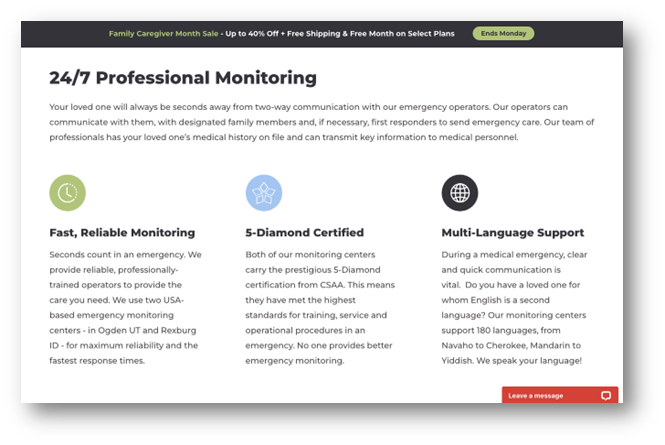
This can include presenting prospects with self-service resources such as sizing charts, FAQ content, or video-format instructional manuals. Or you can focus on addressing CX benefits your audience seeks — as Bay Alarm Medical did — such as free shipping, fast support, or multi-language customer service.
Source: bayalarmmedical.com
Lastly, while exploring opportunities to optimise your sales funnel to prevent buyers from stalling, consider whether you’re presenting your audience with too much information at once.
Yes, a positive buying experience is driven by educational materials and trust-building content. However, expecting your audience to understand too much too fast could cause choice overload, which automatically results in analysis paralysis.
So, try not to overwhelm web visitors. Instead, pay attention to your site’s UX design and use your site’s layout to gently and logically guide prospects toward a purchase, without moving too fast.
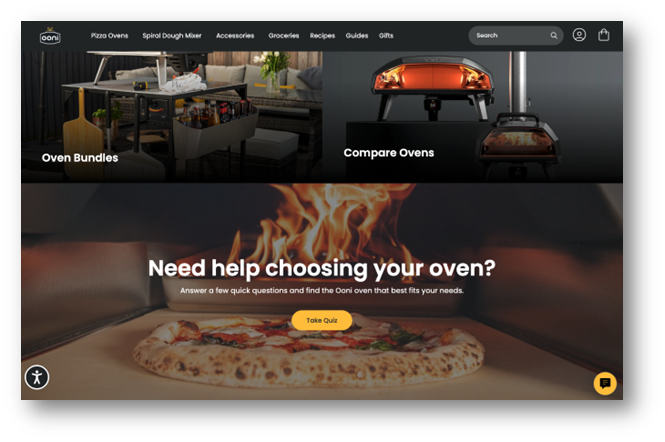
Ooni, for example, knows that choosing a highly specialised kitchen appliance can be a daunting task for its target audience of amateur home cooks. So, it uses an on-site quiz to help prospects discover the ideal product for their needs — a valuable resource that prevents potential customers from getting lost on the website and giving up on a purchase because they’re not sure what’s best for them.
Source: ooni.com
Final Thoughts
There you have it, some of the best ways to bridge the gap between the top and bottom stages of your sales funnel and to ensure more of your prospects convert into customers.
As you can see, none of these tactics is too complex. Yet they deliver exceptional results, so don’t hesitate to implement them in your sales strategy.
To ensure the best possible outcomes for your business, don’t forget to test and adapt as needed. After all, a sales cycle is not a single-touch event but a series of interactions meant to lead to conversion. It needs to work at every single one of its points — that’s the only method to prevent weak links and to get the absolute most out of your marketing efforts.
PS: Not getting FREE media opportunities in your inbox?
Wha?
You can fix that riiiight here.